Home Blog Page 6

Joshua Tree Publishing’s New Book Release by Donal McCarthy

0

Joshua Tree Publishing’s Donal McCarthy, author of the just released book Dònal Òg Series, with Ruchel Louis Coetzee, author of PULANI: A memoir of a young woman in apartheid South Africa, share their thoughts about being published authors.

Donal McCarthy’s Dònal Òg Series

America’s Other Pandemic in 1918

In 1918 a strain of influenza called the Spanish Flu became one of the world’s worst pandemics. Five hundred million people became infected worldwide which was one third of the world’s population. Six hundred and seventy five thousand Americans perished from this influenza which many believe began in America according to the Smithsonian Magazine, November 2017 by John M. Barry.

In 1918 in Haskell County in Kansas, many farmers still lived in sod homes. Farmers there raised cattle and hogs. Seventeen species of birds also migrated over their farmland. Bird influenza infects hogs and humans. An influenza outbreak hit that January in Haskell County. Several of the local residents who had been exposed to the illness ended up in Camp Funston in central Kansas as new recruits training to fight in World War I. On March 4, the first soldier contracted influenza. The disease also spread to other army camps in our country. When there is a new virus and the human immune system is unfamiliar with it, the virus will spread quickly around the world as a pandemic. As American soldiers landed in France, they brought the disease with them, and it spread like wildfire. More American soldiers were killed by the flu than by the war. Remember, there were no vaccines for influenza in those days.

The reason this strain of influenza was called the Spanish flu was because Spain was a neutral country during the war and could broadcast information about the flu to the world. The Spanish flu was a virus that attacked the respiratory system and was extremely contagious through a sneeze, cough, or just breathing. Many American cities closed schools, movie theaters, and large public gatherings. Mask wearing was mandated. St. Louis, Missouri was one of those cities that imposed quarantines and tried to prevent the spread of the disease. More people survived in those communities that took health precautions rather than those that ignored those dying in their cities. In San Francisco, for example, a citizen would receive a $5.00 fine for not wearing a mask in public. In those days, that was a lot of money. Philadelphia downplayed the illnesses in their city saying the dying were not dying from the Spanish Flu. They allowed a parade to take place. Shortly after, 759 people died of the Spanish flu in Philadelphia.

Influenza can still be very dangerous today to the young, elderly, and immunocompromised. It is also extremely contagious. The worst time of the year for the flu is late fall to early spring. Two hundred thousand are typically hospitalized each year for flu-related illnesses in America. Thousands die each year from influenza. There are vaccinations available for the flu today.

It is sad that there were no flu vaccines in 1918. We should be grateful there is a vaccine available to us today.

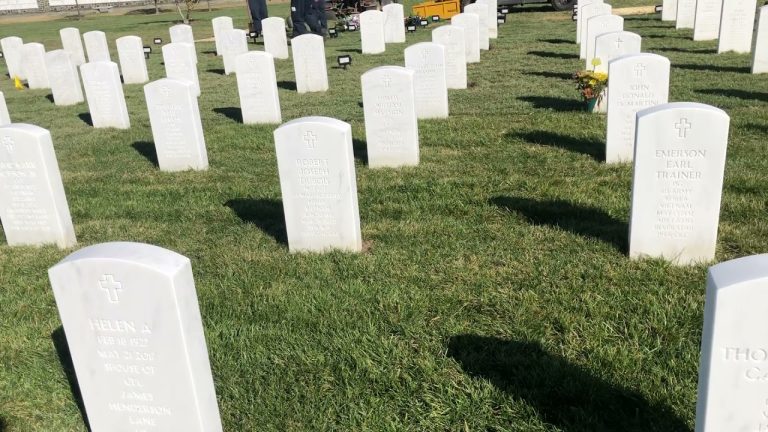
Arlington Cemetery

Honoring the men and women who have fought for our country and the freedoms we enjoy each day.

When will the owls cease to be Watchers?

0

Owls have been known to perch among the branches—and have been accused of watching the world go by. While Truth has it that owls have been long sought out as birds of wisdom, so too does it tell that owls are tremendous observers.

And that the watchers of society need to heed the wisdom inherent in owls. For, although it is granted that owls do indeed see everything, they tend to be pictured as aloof—above the fray. And yet, in a turmoil-boiled world, comfort can be derived from the fact that owls are designated to observe, comment, and inspire.

Maybe, it’s not the owls’ aloofness that bothers watchers. But rather the owls’ ability to transform a moment of silence to a flutter of activity within a once tranquil sea of conformity.

Or maybe, it is the unknown quality behind those pictures of owls that seem to frighten people.

There seems to be a power gathering beneath the owls’ surface which will eventually be released—when the owls cease to be Watchers.

Yona Goes To the Magic Flute

Yona Goes To The Magic Flute is a fun-filled fantasy introduction to Mozart’s great opera, The Magic Flute (Die Zauberflöte).

An extraordinary young girl travels with her teachers and her friend, Ulysses, to the Metropolitan Opera in the Flights of Fancy, a flying piano. Their adventure/lesson is a unique introduction to Mozart’s genius––for opera goers, their children, and grandchildren.

The young heroine is Yona Short, who has magical musical powers. She can change human behavior just by THINKING ABOUT MUSIC.

CES Opens With 2200+ In-Person Exhibitors

0

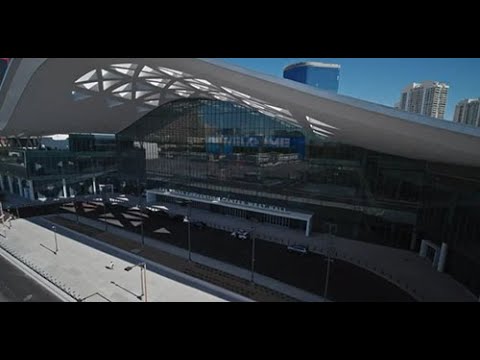
The Consumer Technology Association (CTA)® in-person event opens today January 5, 2022, in Las Vegas and runs through January 7, 2022.
 
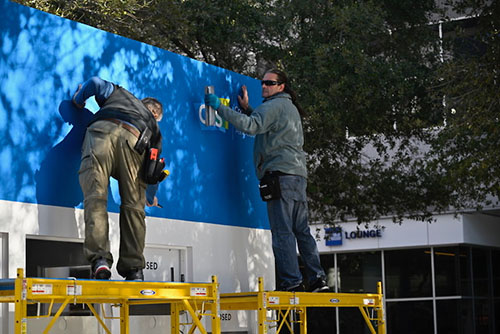
Over 2200 exhibitors are confirmed to exhibit in person at CES 2022. In the last two weeks, 143 additional companies have signed up to exhibit in person. Construction of exhibitors’ show floor space is well underway and soon attendees will be able to see and experience the latest tech innovations.
 
“As the world’s most influential technology event, CES is steadfast in its pledge to be the gathering place to showcase products and discuss ideas that will ultimately make our lives better,” said Gary Shapiro, president and CEO, CTA. “We are shortening the show to three days and have put in place comprehensive health measures for the safety of all attendees and participants.”

China, Into the Breach

0

The U.S.’s primary economic rival continues its efforts to be the predominant influencer in Asia.  On September 16th, China submitted its official application to join the Comprehensive and Progressive Agreement for Trans-Pacific Partnership (CPTPP).  The irony of this development is that the U.S. had once been the country leading the effort for concluding this agreement when it was known as the Trans-Pacific Partnership (TPP) Agreement.

The U.S. announced its participation in negotiating the original TPP in 2009.  The eleven foreign countries involved in the negotiation represented over 40% of the U.S.’s export market for goods based on 2013 trade data.  By the end of 2015, U.S. industry advisory groups were providing the Obama Administration of their views generally supporting a final TPP agreement.  No trade agreement is perfect and industry recognized that the benefits agreed to outweighed some of the less favorable provisions. 

Despite support for the TPP, the Trump Administration had the U.S. withdraw from it. Our trading partners worked toward finalizing and implementing the TPP with a new name, the Comprehensive and Progressive Agreement for Trans-Pacific Partnership (CPTPP).  Without the U.S., the eleven countries remaining decided that some provisions that the U.S. had insisted upon could be suspended.  For example, U.S. insistence on higher levels of protection for patents and copyrights (inventions and creative works, both strong areas of U.S. industry) were set aside and not part of the CPTPP’s final text.

When the U.S. withdrew from the TPP, another Asia-oriented regional trade agreement was being negotiated without the U.S. and pushed by China.  China was engaged in negotiations for the Regional Comprehensive Economic Partnership agreement (RCEP).  The RCEP was a counterbalance to the TPP and negotiations began in 2012.  The RCEP has some of the same countries that are part of the CPTPP.  For example, Japan, the third largest global economy, is part of both agreements.

The RCEP negotiations have been concluded and the fifteen member countries signed the agreement in November 2020.  It will go into effect upon ratification of the required number of countries. 

Commentators have noted that the RCEP does not include any chapters on environment or labor whereas the U.S. negotiated TPP did include chapters on both of these subjects.  Moreover, the U.S. negotiated TPP addressed state-owned enterprises that are plentiful in China.  The RCEP, however, does not have a chapter addressing specifically state-owned enterprises.

With China taking a leadership role in Asian trade through the RCEP and with its application to join the CPTPP, China is taking advantage of the U.S.’s absence in these regional trade agreements.  It becomes more difficult for the U.S. to obtain concessions from other members of these agreements if China beats us to the table or when we decide not to sit at the table. 

At present, it is difficult to see what the U.S. trade agenda is as it relates to Asia and, more specifically, regarding the CPTPP and RCEP.  What is clear is that we are no longer sitting at the big table where trade provisions are being negotiated and have implications for U.S. business interests.  Whereas at one time the U.S. was drafting the provisions that would help U.S. businesses operating in the region, today we are not in the room where the discussions are taking place.

China’s economic and trade influence has been on the rise for some time.  It should be no surprise that China would now seek to capitalize on the U.S.’s withdrawal from the TPP and seek to become a dominant party to the CPTPP.  The task of obtaining concessions and getting our preferred language into future trade agreements has just become more difficult and complicated.  The U.S. needs a dynamic and vibrant trade strategy that allows all interested sectors to provide inputs to confront a very challenging global trading system.

We are all Entrepreneurs

Whether you are a stay-at-home parent or a business executive, we are all running a small business, which is called our life.