Home Blog Page 7

Derek DelGaudio’s In & Of Itself (Hulu)

0

Derek DelGaudioโ€™s In & Of Itself is a film I can’t explain. I believe it is one of the most poignant, emotionally moving, and challenging minutes I have spent. I have watched it three times in its entirety. Each time I go away feeling something inside of me has changed. And it has. I just can’t explain it. I would encourage you to take that journey yourself. Turn your cell phone off and any other distractions. Turn off your inner dialogue and let the film flow to you.

Here is what Hulu says about its original film: “In & Of Itself tells the story of a man fighting to see through the illusion of his own identity, only to discover that identity itself is an illusion. An intimate and powerful exploration of what it means to be and be seen, the film chronicles Derek DelGaudioโ€™s attempt to answer one deceptively simple question, “Who am I?” His personal journey expands to a collective experience that forces us to confront the boundaries of our own identities.”

In one of the opening scenes, members of the audience are looking at a large board with โ€œI Amโ€ cards to pick from. Some are very contemplative, others less so. Some are smiling, others are very serious. But each one has to make a decision before sitting down. Carrying in their hand a slip of paper identifying who they believe they are . . . at least at that moment.


In the background, you hear Derek DelGaudio.

They ask you, โ€œWhat do you want to be when you grow up?โ€

Later they ask, โ€œWhat do you do?โ€ which means โ€œWhat have you become?โ€

It is not enough to have a name. They need something to call you. So, you search. You look at the roles the world offers you, trying to find the one that reflects who you are.

Only a lucky few get to play the role they want. The rest settles for whatโ€™s left or struggle with what they have been handed. Then we all learn to embrace our illusions of identity.

I did. I thought I knew my role. Then I met a man who told me who I really was.

And I knew he was right. I just didnโ€™t know why.


From that scene in the film and on, I will not spoil the journey for you. As I said, I can’t really explain it. You just have to watch it yourself.


In & Of Itself is a Hulu Original and was a one-of-a-kind theater experience, created by Derek DelGaudio and directed by Frank Oz. The show had its World Premiere at the Geffen Playhouse in Los Angeles on May 3, 2016, where it saw several extensions before moving to the Daryl Roth Theater in New York City. It opened Off-Broadway to critical acclaim and once more quickly extended its initial 10-week engagement, selling out its intimate 150-seat house, night after night. The show continued extending its run, again and again, until DelGaudio decided (somewhat controversially) to end the show at the height of its success, stating, โ€œI feel like Iโ€™ve said what I wanted to say.โ€ After 72 weeks, 560 performances, and grossing over $7 million at the box-office, In & Of Itself closed as one of the most successful shows in off-Broadway history.
Independence Day and Freedom to . . .

0

The annual July 4th Independence Day celebrations with fireworks, cook-outs, and family gatherings are all moments of light-heartedness and fun.  Reflecting on the holiday and the birth of a nation provides a broad spectrum of things to consider regarding the continuing experiment in this democracy. 

Since last yearโ€™s Independence Day, so much has occurred in the United States that there is no shortage of issues that the country and its citizenry should consider and address.

In late June, General Mark Milley, the highest-ranking uniformed officer in the U.S. military became the focus of the news media.  Speaking before a committee of the U.S. House of Representatives, he stated that he, personally, wants to understand white rage.  He admitted to reading books about communism and Marxism.  He seemed to emphasize the importance of having a well-read and educated military force.  He was so bold as to point out to members of Congress that West Point (the U.S. Military Academy) is a university, a place of learning.

General Milley raised interesting and relevant issues.  Today, the U.S. military is a diverse organization with approximately 30% of the overall military self-reporting as other than white.  He rightly pointed out that his force is made up of people who come from the general population and, therefore, it is important to understand the issues that plague society as a whole.  The fact that this commander and others who oversee the daily effectiveness of our fighting force seek to improve their understanding of complex social issues and prevent those issues from being a distraction to the fighting force should be supported. 

We should remind ourselves that those who are serving, regardless of rank, race or ethnicity, take an oath to protect and defend the constitution against all enemies, foreign or domestic.  That oath that they take means they serve to ensure everyoneโ€™s constitutional rights.

General Milley and other retired officers know that despite all the efforts undertaken, the U.S. military has far to go to be better when it comes to understanding some of these divisive issues.  The Generalโ€™s comments are encouraging and exhibit a desire to understand in order to ensure a unified fighting force that protects the foundations of the United States.

It is surely a sad development when the Generalโ€™s stated determination to understand the issues that divide the country are met with derogatory name-calling. 

While the derision and name-calling are hard to understand, one thing is clear.ย  Americans have the right to insult the General.ย  They have the right to deny facts and reality.ย  They have the right to ignore science and believe in lies.ย  And, as a result of having a society where millions can exercise deliberate ignorance, the only question that remains unanswered is how long it will take until the denial of facts and reality bring down this democratic experiment.

The views expressed are those solely of the author.ย  Timothy Trainer is an attorney and veteran.

Ingram’s Transformation of the Publishing World

U.S. Book Show by Publishers Weekly

If youโ€™ve never heard the name John Ingram, you will be surprised to learn that his family has been instrumental in transforming the publishing industry. In โ€œA Conversation with John Ingramโ€ at Publishers Weeklyโ€™s U. S. Book Show, you learn that Ingram played an important role during the recent pandemic in keeping books available while supply chains were disrupted. Years ago, Ingram Books started Lightning Source, a digital printer and wholesaler, which was instrumental in transforming the world of publishing into print on demand or POD. What that means is that books are printed and distributed as needed rather than sitting in a warehouse waiting for orders. Now this concept was totally transformational in the publishing business, where traditional publishers, as they still do, print thousands of books at a time, store them in a warehouse, and send them to bookstores when orders are received. Of course, the pandemic changed all of that. As John Ingram would say, Lightning Sourceโ€™s motto is, or rather became, โ€œJust in time, just in case.โ€

In June of 2020, 50% of the books on the New York Times bestseller list were provided, either printed and/or distributed, by Ingramโ€™s Lightning Source. While that percentage will change as we return to โ€œnormal,โ€ you cannot help but wonder if this lesson will not be lost by the industry as a whole. Would you want to risk printing of your content and your ability to distribute that content without the backup Ingram Content Group offers publishers?

So, what led to Ingramโ€™s success. John Ingram summed up his business philosophy like this: โ€œI want to do well by helping others do well.โ€

If you want to learn more about this success story, buy the book. You wonโ€™t regret it.

The Family Business Cover

About the Interview:

Jim Milliot, V-P and Editorial Director, Publishers Weekly, sat down with John Ingram, chairman of Ingram Content Group, and Keel Hunt, author of The Family Business: How Ingram Transformed the World of Books (West Margin Press), for a discussion about how the company has managed to remain one of publishingโ€™s most important players and what is ahead for the industry.

Oprah Winfrey to be Keynote Speaker at U.S. Book Show

Oprah Winfrey will be the opening keynote speaker at the U.S. Book Show, the virtual book publishing trade show presented by Publishers Weekly.

Oprah Winfrey will give the opening keynote speech on May 25, 2021 at 10:45 a.m. EDT. She will discuss her newest book, What Happened to You?: Conversations on Trauma, Resilience and Healing, co-written with Bruce D. Perry, a child psychiatrist and neuroscientist. The book, released by Flatiron on April 27, discusses how peopleโ€™s earliest personal experiences shape their entire lives. The book offers a new way to understand the way people behave. Winfrey, one of the biggest supporters of all members of the book industry, will also offer comments on her love for books and authors and offer her appreciation and encouragement for all those who support them.

Author of NYT Bestseller So You Want to Talk About Race to Set Stage for Book Fair

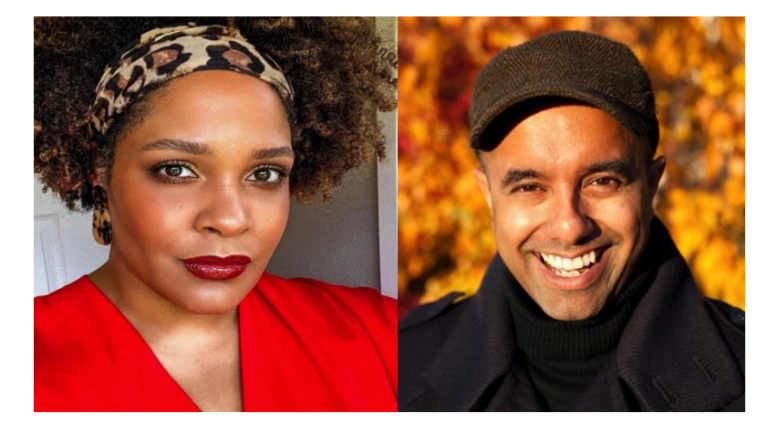
Ijeoma Oluo, the author of So You Want to Talk About Race and Mediocre: The Dangerous Legacy of White Male Power, is to speak at the U.S. Book Show. Ms. Oluo will be in conversation with Rakesh Satyal at the U.S Book Show. Mr. Satyal acquired Ms. Oluoโ€™s forthcoming book, Be a Revolution, for HarperOne last year.

Named one of Seattleโ€™s top 50 most influential women, the Nigerian-American Oluo, who lives in Seattle, is a widely admired speaker and author who saw her nonfiction So You Want to Talk About Race (Seal, 2018) hit the New York Times bestseller list with its publication in 2018 and remain a consistent bestseller. Since its release in 2018, the book has sold more than 405,000 print copies, according to NPD BookScan.

Publishers Weekly gave Mediocre: The Dangerous Legacy of White Male Power, published by Seal Press in December, 2020, a starred review, noting, โ€œErudite yet accessible, grounded in careful research as well as Oluoโ€™s personal experiences of racism and misogyny, this is an essential reckoning with race, sex, and power in America.โ€

โ€œWe are pleased to sit down to discuss Ijeomaโ€™s groundbreaking work, including So You Want to Talk About Race and Mediocre, as well as give viewers a sneak peek into her next book, Be a Revolution,โ€ said Mr. Satyal.

Rakesh Satyal is executive editor at HarperOne, a division of HarperCollins Publishers, and a Lambda Literary Award winner for Blue Boy (Kensington, 2007), which also won the 2009 Prose/Poetry Award from the Association of Asian American Studies. His second book was No One Can Pronounce My Name (Picador USA, 2017).

โ€œIjeoma Oluo is a great talent and an important voice in the national conversation. We are thrilled about having her take the stage at the U.S. Book Show to reflect on her past writings and take us into the future with a discussion of Be a Revolution,โ€ said Krista Rafanello, senior marketing director of Publishers Weekly and the show manager of the U.S. Book Show.

Ms. Oluo was named to the 2021 TIME 100 Next list and has twice been named to the Root 100. Her work on race has been featured in the Guardian, the New York Times and the Washington Post, among many other publications. She received the 2018 Feminist Humanist Award and the 2020 Harvard Humanist of the Year Award from the American Humanist Association.

Top Celebrity Talent Adds Sparkle to a Day Devoted to Kidsโ€™ Books

Brian Selznick, the bestselling childrenโ€™s book author and Caldecott Medal-winning creator of The Invention of Hugo Cabret, which was adapted into the Oscarยฎ-winning film Hugo, and Padma Lakshmi, the host and executive producer of Bravoโ€™s Emmyยฎ Award-winning Top Chef and creator and star of Huluโ€™s Taste the Nation, will speak at the virtual U.S. Book Showโ€™s โ€œChildrenโ€™s Books Day,โ€ May 27, 2021. They join Senator Elizabeth Warren, a first-time childrenโ€™s author, who will deliver the opening keynote of the day.

An award-winning cookbook author, Padma Lakshmi can now add childrenโ€™s book author to her extensive list of accomplishments as an author, TV personality, model and film actress. Tomatoes for Neela (Viking Books for Young Readers, August 31, 2021), a picture book for children illustrated by Caldecott Honor artist Juana Martinez-Neal, is the subject of Lakshmiโ€™s midday talk at the virtual U.S. Book Show. Lakshmiโ€™s previous books include three cookbooks and a memoir, Love, Loss, and What We Ate (Ecco, 2018). Lakshmi lives in New York City.

Brian Selznickโ€™s live talk will be followed by a live Q&A about his forthcoming novel Kaleidoscope (Scholastic Press, September 21, 2021), mid-afternoon of the Childrenโ€™s Books Day at the virtual U.S. Book Show. His author and illustrator credits number 29 books, including the historical novel Wonderstruck (2011), The Marvels (2015), and a book for younger readers, Baby Monkey, Private Eye (2018), written with David Serlin. Selznick, who splits his time between La Jolla and Brooklyn, is beloved by his fans of all ages.

Lakshmi and Selznick join Senator Elizabeth Warren in punctuating the day with exciting top talent sure to please the audience of publishing professionals, librarians and booksellers.

Senator Warren opens the day with a keynote conversation with her editor, Laura Godwin, publisher of Godwin Books, to discuss the senatorโ€™s first childrenโ€™s book. Pinkie Promises (Henry Holt, October 12, 2021) is an engaging picture book tale of loyalty, female empowerment and political engagement, written by Senator Warren and illustrated by Charlene Chua. Senator Warren will speak on Thursday, May 27, 2021, at 10:30 a.m. EDT.

A videotaped short piece will be also played at the opening of Childrenโ€™s Books Day to promote and build awareness of Boys & Girls Clubs of Americaโ€™s support of literacy and education.

Publishers Weekly will donate a portion of the proceeds of the U.S. Book Show to Boys & Girls Clubs of America in support of its literacy programming. Boys & Girls Clubs of Americaโ€™s literacy and academic support programs include Summer Brain Gain, which runs for one month this summer as a virtual program featuring authors of a picture book, a middle grade title and a YA book. Club leaders and members are invited to attend the show for free and access unlimited content on-demand throughout the summer.

U.S. Book Show by Publishers Weekly

The inaugural U.S. Book Show is a three-day virtual conference conceived and crafted by Publishers Weekly to build buzz about Fall 2021 books and to serve the bookselling, library, media and book publishing industry. The event is live-streaming and available on-demand through August 31, 2021.

Publishers Weekly will donate a portion of the proceeds of the U.S. Book Show to Boys & Girls Clubs of America in support of its literacy programming, including Summer Brain Gain.

The show runs May 25 โ€“ 27, 2021, and features a wide array of editor, book and author panels; livestreaming Q&A sessions with editors; topical library panels; programming geared to publishing professionals; networking opportunities and awards celebrations; and robust exhibit halls featuring 200+ publishers.

To view the show schedule and registration information, go to https://www.usbookshow.com (#USBookShow).


About Publishers Weekly

Publishers Weekly is the international news platform of the book publishing industry. Founded in 1872 and published weekly since then, the magazine boasts 1.23 million social media followers; publishes 10 e-newsletters, BookLife (a website and semimonthly supplement), Publishers Weekly en Espaรฑol (in partnership with Lantia), two blogs, podcasts, a mobile edition, digital editions, and apps; and features a website that reaches 14 million unique visitors annually.

Damn Asians (Chinese? Japanese? Korean? Indian? Turks? Uzbeks?)!

0

The recent reports of increased violence against Asian-Americans are troubling, but nothing new.  The history of Asians in the U.S. is marked by negative actions against this group by U.S. citizens and the U.S. Government. 

The current focus on Asian-Americans or Chinese-Americans may be attributed to the Covid-19 pandemic and how politicians have pointed a finger at China for our misery.  This, in turn, has seemingly given citizens an excuse for their violence against U.S. citizens of Asian descent. 

Every time the term โ€œAsian-Americansโ€ is used, it begs the question whether Americans can look at a world map and point out the actual size of that continent and the many countries that make up Asia.  Given the current wave of โ€œanti-Asianโ€ violence, it is easy to conclude that those targeted โ€œlookโ€ Asian as opposed to those Asians who have the physical look of Europeans.

If one looks back to recent history, Japan was a favorite target for the ills of the U.S. auto industry and how it was seemingly dominating other manufacturing sectors such as home entertainment equipment.  South Koreaโ€™s rise is evident in autos and high-tech areas while Taiwan companies moved into computer chip production areas.

During the past few decades, some of the animosity toward Asians or Asian-Americans is, frankly, because of their success.  Japan, South Korea, and Taiwan are small countries in actual territory and their populations are small as a percentage of the U.S. population, yet, they have become global economic powers.  The anger and resentment toward Asians are easily manifested in violence since Asians are easy to identify within the U.S. population.    

For the Asian-Americans who are U.S. citizens, a great number are here due to generations having worked hard and succeeded in the U.S.  The Chinese who arrived in the 1850s and later worked in factories and in agriculture and contributed significantly to the railroad industry.  As the number of Chinese workers increased, this prompted anti-Chinese sentiment in the U.S.  The growth of the Chinese communities along the west coast prompted efforts to limit the number of Chinese immigrants.

The increased level of anti-Chinese sentiment in the U.S. resulted in a treaty between the U.S. and China.  Ultimately, the U.S. Congress passed the Chinese Exclusion Act, and it was signed into law in 1882.  This Act limited Chinese immigration to the U.S. and, for a decade, suspended Chinese immigration. 

For Japanese and Koreans, the Hawaiian plantations played a major role in their immigration.  The need for labor to work plantations in Hawaii facilitated the immigration for workers.  Japanese began arriving in Hawaii in the latter part of the 1800s and Koreans the first years of the 1900s.  Eventually, they would arrive on the U.S. mainland.

Historically, some have written that the Immigration Act of 1924 (also referred to as the Oriental Exclusion Act of 1924) was โ€œto preserve the ideal of U.S. homogeneity.โ€  In effect, this law prohibited Asian immigrants. 

It is one thing to prevent people entry into the U.S. and quite another to imprison U.S. citizens.  Americans of Japanese descent endured the loss of their freedom, businesses and homes during World War Two for simply being of Japanese descent. 

Yet, despite the treatment of Japanese-Americans during the war, an Army unit made up of second-generation Japanese-Americans (442nd Regimental Combat Team) is still the most decorated unit for its size and length of service in the history of the U.S. military.

Given todayโ€™s national environment, it is important to be aware of the fact that for over 150 years U.S. citizens of Asian descent have contributed significantly to U.S. society in all of the countryโ€™s endeavors.

While many may not necessarily like the result, the current U.S. Vice-President can point to her Asian (Indian) ancestry.  The newly confirmed U.S. Trade Representative is Chinese-American. 

Throughout U.S. history, one thing has been proven time and again and that is that oneโ€™s ancestry has nothing to do with a personโ€™s devotion to serve and protect the United States.  Americans of Asian descent prove this every day.

**The writer is of Japanese-European descent.

Borders, Bureaucrats and Blame

0

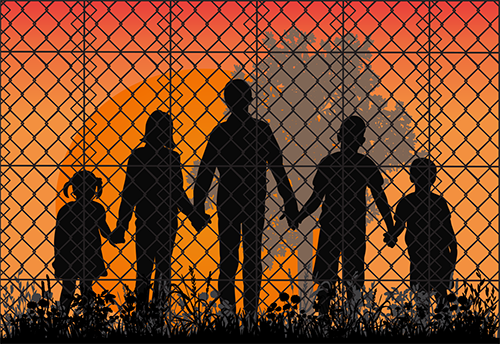
The headlines and newscasts are raising the issue of the U.S. southern border, again.  Reports of thousands of unaccompanied minors are in the news.  The political parties will verbally battle over the issue endlessly, but the odds are that little or nothing substantive will get done to address the issue in the near term.

What is often ignored or superficially addressed is why are conditions in Central America causing the march northward.  It begs the question, why, after touting a major agreement with Central America, the migration northward continues. 

The U.S. concluded a free trade agreement with several small economies of Central America (Costa Rica, El Salvador, Guatemala, Honduras, Nicaragua, and the Dominican Republic).  In view of the continuing exodus of people from their home countries, what are we doing (or not doing) to improve these economies so that people stay in their home countries?

Negotiating the U.S.-Central America Free Trade Agreement (CAFTA) began in 2002 and by 2009 the agreement was in effect with all these countries.  Given the different levels of economic development, these countries were given different periods of time to fully implement the agreement. 

There are numerous chapters in the agreement that impose obligations on issues such as labor, environment, electronic commerce, financial services, telecommunication services, intellectual property and more.  A part of the goal was to lift these economies to higher levels.  Supposedly, CAFTA would improve economic conditions. 

The U.S. negotiated favorable provisions to benefit U.S. exporters.  According to the U.S. Department of Commerce, CAFTA eliminated all tariffs on U.S. consumer and industrial goods exported to these Central American countries.  Tariffs on U.S. agricultural exports to these countries were significantly eliminated by 2020.

On the surface, it appears that U.S. negotiators were successful in concluding an agreement that overwhelmingly favored U.S. commercial interests.  But, did CAFTA do anything to address the underlying weaknesses of these countries that cause the โ€œexportโ€ of its population to the U.S. and is a constant controversial issue here? 

By obtaining concessions from these small countries, has U.S. dominance in trade weakened these economies and caused more economic harm or instability?  The continuing northward march from some of these CAFTA countries is a symptom of some fundamental issues that should be examined and addressed. 

It may be argued that these countries were never good candidates for a free trade agreement because their economies were not sufficiently developed.  The final CAFTA text recognizes this point in a minor way by including โ€œtransitionโ€ periods allowing these countries to take additional years to fully implement the agreement.  However, even this is often inadequate.  The U.S. blames shortfalls on implementation on the country that fails to meet its obligations.  Regarding our agreements with developing countries, the U.S. rarely, if ever, provides sufficient education and training to help the trading partners that are deemed to be โ€œviolatingโ€ the terms of the agreement.  Often, the developing countries that lag in implementation do so because of a lack of skills and/or expertise in the areas that need the most attention for improvement.

While the Office of the U.S. Trade Representativeโ€™s website informs us as to the great success of CAFTA, the arrival of thousands at our border may signify a different reality.  What is needed is a deep-dive assessment of the underlying economic and political deficiencies that cause this northward migration.

Is CAFTA improving economic opportunities (jobs, pay, etc.) with our CAFTA trading partners?  Do CAFTA partners need training and education for them to fulfill their obligations under the agreement?  Has the U.S. simply concluded an agreement and now hopes all will be better at some point in the future without doing the hard work necessary for CAFTA to have benefits in these countries?

The overall situation should require U.S. embassies in these countries to provide assessments about the progress or lack thereof under the agreement and outline the deficiencies.  Hopefully, our career bureaucrats are permitted to provide the bad news as well as the good news.  Career U.S. diplomats and federal government officials in various agencies responsible for monitoring progress need to identify how the U.S. can contribute to improvements in these countries if CAFTA is to deliver benefits to all countries party to the agreement. 

One thing that is clear is that U.S. taxpayers will pay for the deficiencies of the agreement.  Either U.S. taxpayers will be paying for thousands of Central Americans coming to the U.S. or the money will be spent to try and improve the plight of these people in their home countries. 

There are many instances where U.S. trade agreements, once concluded, fail to deliver for all the parties involved because of a lack of honest assessments and due to an inability to recognize the fact that our trading partner is unable to meet its obligations.

The arrival of people at our southern border and the illegal crossing into the U.S. reflects a combination of many shortcomings.  While U.S. government websites may gloss over shortcomings and emphasize the positives by pointing to supporting statistics, the issue of thousands from Central America making their way to the U.S. and attempting to enter illegally will remain in the headlines. Politicians will continue arguing and manipulating the situation for their political ends.  Unfortunately, none of the headline grabbing soundbites will do anything to address the underlying problems.  What is needed is a serious examination into whether the U.S. wants to engage in the hard work necessary to make CAFTA deliver the economic benefits to the people of the countries that signed the agreement.

U.S. Supply Chain Security

2

President Bidenโ€™s February 24th Executive Order is, to some extent, an extension of past efforts that recognized vulnerabilities in supply chains.  What has changed during the past year is the degree to which the US experienced its vulnerabilities in critical areas during this national emergency.

The past year exposed us to the problems arising from shortages of medical products.  But, the issue of supply chain security and integrity should not be viewed from the perspective of our vulnerabilities during national emergencies.  Supply chain security is a 24/7 issue. 

Whether it is shortages of critical products or everyday products, supply chain security is a constant issue and has been for an extremely long time.  Substandard goods entering the supply chain or outright bogus (counterfeit) products competing with genuine goods, has been and continues to be a challenge for both government and non-government commercial enterprises.

The gaps and vulnerabilities in supply chains was and continues to be a serious issue for the US Department of Defense.   For example, the 2012 National Defense Authorization Act included provisions that imposed a duty on defense contractors to take affirmative steps to prevent fake electronic components from entering US defense systems.  Under the 2012 Act, defense contractors and subcontractors were obligated to establish and maintain counterfeit electronic part detection and avoidance systems. 

What is important to note is that the enactment of laws and executive orders do not stop or eliminate threats and vulnerabilities.  Despite the emphasis on supply chain integrity and ensuring that defense related items meet the requisite standards, instances of counterfeit items sold to the US Department of Defense continues. 

For example, in 2014, two businessmen pled guilty for selling counterfeit and modified computer equipment to the Army.  In 2017, a major corporation agreed to pay over a million dollars to settle a claim that involved one of its subcontractors installing substandard microprocessors in military helicopter control systems.   

When one considers the combination of the number of sophisticated component parts needed in medical and military equipment and money involved, it is not difficult to conclude that there are individuals and businesses willing to take risks in using substandard and fake parts to win lucrative contracts. 

The industries prioritized in the Executive Order include those that have long and extensive supply chains.  With the thousands of components in vehicles, medical equipment and products, and military systems, there are hundreds or more contractors and subcontractors.  Thus, the monitoring and policing to ensure supply chain security and integrity is a complicated process that itself requires the latest technologies to authenticate parts and products.

For industry and government, supply chain security is a significant challenge.  What technologies are contractors and subcontractors using to authenticate parts and products?  How many different authentication technologies are involved in any one final product given the number of components involved?  These and many other questions need to be addressed.

As noted above, there are legal liability issues.  What are the civil and criminal provisions that may apply when a person or business is found to have violated established rules or laws? 

One example of criminal liability that explicitly carves out higher fines and terms of imprisonment for trading in military goods or counterfeit drugs is the federal law provision on trafficking in counterfeit goods.  This federal criminal provision raises the stakes for those found guilty of trafficking in โ€œcounterfeit military good or service or drug that uses a counterfeit markโ€.

Ultimately, supply chain security and integrity will continue to be a daunting challenge when there are many who will seek to exploit commercial opportunities for their own financial benefit and with disregard for the safety and welfare of others.  And, because supply chains cover long distances, there are many points along the chain where substandard and fake components may be inserted.  Active vigilance will be necessary to reduce the risk to the consuming public.